My new book is finally out! It’s a book that attempts to find wisdom by examining the meaning of expressions that are commonly used on an everyday basis. For instance, we all use expressions such as, “to age gracefully,” “to live life to the fullest,” or to “snap out of it.” We talk of “true love,” “free love,” and of “making love,” or of “getting to the bottom of something,” of “making it,” and of “hating to admit it.” We use these expressions because they communicate something important about a given topic that we find to be deeply meaningful. We use these expressions, but we don’t necessarily take the time to reflect on what we really mean by them. The point of this book is to encourage people to reflect on what these given expressions and the topics they deal with, really mean to one’s self. My hope is that, upon reflecting a bit on what such expressions mean, each person will be more readily equipped to put into practice the wisdom needed to make such meaning a reality in one’s life. Hopefully my interpretations give some helpful insights, but the main point is for each person to discover their own interpretations and meanings.
Category Archives: Articles
The Difficulty of “Telling It Like It Is” And “Moving Forward”
A friend who had recently lost her father was talking to me about her experience with two mental health practitioners; one, a psychiatrist, and the other, a counselor. At her last appointment my friend asked the psychiatrist what she needed to do in respect to the grief she was experiencing in lieu of a father/daughter relationship marked by a history of abuse and neglect. The psychiatrist responded directly and with little to know registration, by saying, “It’s time to grow up, be an adult, and stop being a child.”
According to my friend this was the best advice she had yet to receive. Upon hearing it she resolved to get off her medication, reassess her life, and begin setting up routines around healthy habits and helpful daily activities, creating a healthy disposition that has lasted up to the present time.
My friend also went to her counselor and told her what the psychiatrist had told her. The counselor was horrified. My friend explained however that the advice was the best she had yet to receive, and how it was the catalyst for encouraging her to own her ability to respond, be responsible for her life, and take action to improve her well being.
Being a counselor myself, I understand why the therapist was outraged by the psychiatrist’s remark. The counselor, being aware of the trauma that lies beneath my friend’s suffering, was rightly concerned how such trauma had unconsciously shaped my friend’s life over the years. The counselor was being conscientious of how such trauma could be affecting her in ways that might be preventing her from accessing her full potential in the way of relationships, expression, motivation, etc. and how allowing herself to be with those emotions as opposed to repressing them would be essential for overall health and well being. Concerns that are entirely justified.
But I also know why my friend felt revived by the psychiatrists “tough love” that more or less said, “Suck it up, move on, and grow up.” My friend appreciated the honesty, the directness, and the emphasis that made her realize that she had the ability to make changes in her life in conjunction with a well-rounded course of action, as opposed to her counselors seeming emphasis on continuing to grieve indefinitely.
In this article I will use this story, along with the perspectives of the counselor and psychiatrist, to highlight the difficulties associated with having to say difficult things, not just as a counselor but as friends and family members as well. In particular, conversations in regard to how one should best approach processing difficult experiences while also cultivating the ability to move forward in one’s life.
In regard to the latter, I will emphasize an orientation that allows for moments of pause, grief, and reflection, as well as one that emphasizes the ability to move forward in one’s life. This approach is a synthesis between providing the space, time, and understanding that allows and encourages the reality of difficult experiences to be acknowledged and processed while simultaneously being grounded in an emphasis that highlights the ability of human beings to take action and move forward through the integration of one’s experiences.
Most everyone loves having that person they can go to for real advice, where the person will be direct, cut through the proverbial b***s***, and “tell it like it is.” This is one way by which we understand the concept of “tough love,” loving a person enough to tell them directly, something that they may not want to admit or hear but is nonetheless apparent.
We have such friends or people in our lives because we trust they will get to the point; they have a strong sense for who we are and what works for us, and thus there is confidence in hearing what they have to say, even if there is a degree of irreverence or hard honesty to it; we are less likely to be offended because we trust them, and that trust was built on the mutual foundations of trust, respect, and acceptance.
Often it is hard to duplicate such a situation in counseling or therapy. Many people build up such a relationship over time through a sustained and regular engagement with a particular counselor over a number of years, but in truth, the counselor/client relationship is largley an artificial one. Some counselors of course will be more direct and to the point than others, regardless of the situation, the person, or how long they have been seeing the client for.
Either way, most people are looking for a therapeutic relationship where the counselor will speak directly, honestly, and even intensely. I know a number of people who have dropped counselors particularly because the counselor simply sat back, listened, and validated everything they were saying, never confronting or asking hard questions. “I want to be challenged,” a number of friends and colleagues involved in therapy have said to me. And yet to my understanding, many counselors lack the ability to challenge their clients.
The reason for this is mainly twofold: one the one hand, many counselors lack the ability to challenge their clients because of their own fears and insecurities. On another, much of the therapeutic climate is one that emphasizes validating the client’s interpretation of themselves and their experiences, almost to an excessive degree. On important aspects this is indeed essential and necessary, but it becomes absurd when such an attitude is taken to the extreme and discounts the reality that many, if not most people, lack reasonable insight into who they are.
Culturally, we have also resorted to an ideology of “normalcy” which says that most everything a client believes is valid, especially when a remark is met with a rebuttal by a client who feels uncomfortable and offended in regard to what the therapist said to them concerning their behavior or character. There is an obvious degree to which such an attitude is valid, especially since it has been taken up in response to past trends within standard psychoanalytic practices of the last century which placed all say concerning the truth about the client’s behavior in the hands of the analyst.
Thankfully, the field has gotten around to a place where more of what a client says is taken at its word, albeit sometimes to a new extreme. In reality, any therapy that is truly honest will eventually involve some kind of confrontation. Surviving the confrontation, it has been said, is ultimately what determines success in the counseling/client relationship.
But this is too far afield from the current article. Suffice it to say that legitimate therapy involves the difficult task of creating a container where truth can be both spoken and received. Unfortunately, this is easier said than done. Apart from the difficulty of building a close relationship seemingly from scratch, the truth is that most people do not want to hear the truth. We assume we can handle it, and even want it without first asking ourselves, “Will I be able to accept the truth?” If this wasn’t the case, then therapy as a practice would be irrelevant. The whole field of therapy is in fact predicated on the reality that individuals lack objective insight into themselves.
Everyone speaks with a determination and desire to hear the truth, but we all have been in that situation where severe ruptures occurred, some permanent, after the truth, the truth that the person we were speaking to was so adamant to hear, was spoken; people do not unhear or unknow things, and thus, something said in an instant, despite the intentions, can lead to long standing or permanent ruptures. Not to mention the simple fact that our interpretations can often be wrong.
The other “shadow side” to speaking directly, involves an underlying “toughness” that is encouraged at the expense of not allowing other important aspects of life to flourish, and to be experienced and expressed. This is why the therapist was horrified by what the psychiatrist had told my friend. The therapist was horrified because advice given by the psychiatrist seemed to encourage a moving forward that was built on the denial of one’s feelings.
My friend had experienced a traumatic relationship with her father, one that was directly related to the strong grief and anger that she had been experiencing, and to simply move on and “grow up” would mean the continued repression of emotions that would nonetheless find a way to come out and interfere with my friend’s ability to have a more wholesome and meaningful life.
Current research about trauma, especially trauma originating in childhood, along with the gradual breakdown of past assumptions and cultural expectations regarding affect control and emotional expression, has led to a greater awareness of the dangers of emotional repression and how it negatively affects a person’s ability to maximize their vitality, self control, and cognitive abilities. As a result, much greater emphasis is being placed on past trauma, how it is processed, and the lasting effects of it.
Now there is a much greater emphasis placed on allowing people to experience their emotions, talk about their pasts, and mourn their losses. And yet this new encouragement has been met with resistance. One can hear it the complaints that today’s culture are whinny babies who want everything given to them for free; where everyone receives a trophy so that no one’s emotions are hurt; and where safe spaces exist to avoid a person’s views on life from being challenged and their sense of identity being potentially broken down. Though I do not know the overall beliefs of the psychiatrist we can nonetheless place his admonishment to “grow up” as being indicative of a person who feels too much coddling is occurring and is getting in the way of a person’s ability to move on and engage with their sense of agency in directing how they want their life to be.
Here there is a relevant point to be made with regard to such a concern. Indeed there is something to be said about a set of practices that overemphasize the effects of how past experiences shape one’s life in permanent ways just as there is something to be said about a set of practices that undervalues emotional expression and the effects of trauma on a person’s development. In regards to the former, there is a valid concern that an overindulgence in one’s grief and one’s past prevents a person from realizing that, despite the negative experiences of one’s life, there nonetheless exists a sense of agency that involves being able to “let go” of what occurs, learn from it, and move on in ways that successfully integrate the experience.
In many ways the pendulum of society concerning how to function and how adapt to life has swung radically from one direction to another. What used to be an emphasis on emotional repression through rugged individualism, puling one’s self up by the bootstraps, and “grabbing the bull by the horns,” has shifted to where one’s sense of self and agency being dependent on other people and society. For so long there was such a denial of feeling and the expression of emotions that now there is an overindulgence in them, one that occurs at the expense of the having the ability to take action to improve one’s life.
We resonate with “tough love” because it can spur us to take action and resist the urge to wallow in our suffering indefinitely. The problem that arises, as stated earlier, is that a drive to take action will not be successful if done through a forced repression of emotions and a denial of the reality of what happened. Thus, both the therapist and the psychiatrist expressed valid points of view that were built on valid considerations.
Thus, a comprehensive view conducive to encouraging a person to move forward in life while simultaneously expressing the necessary affect related to difficult experiences, must be one that allows for normal bodily reactions of anger, grief, sadness, and doubt to be acknowledged and expressed. It must further emphasize the power to make decisions that result from having integrated the affect into one’s character so as to go on living, and not to become the victim of a fatalistic sense of determinism and pointless self-indulgence.
There is undoubtedly a time for stillness, reflection, mourning, and grief, but these must be tempered by a willingness to take actions in the present moment, and to let go and move forward with decisions that are conducive to a healthy disposition. As friends, partners, and therapists, we have to encourage both in our dealings with those we care about and those whom we are trying to help.
There will never be a formula for knowing when exactly something difficult needs to be said, perhaps even something confrontational, something we know needs to be said but won’t necessarily be received well. That is why there is an art to being a therapist or just a good friend, partner, or overall conversationalist. It requires patience, attentiveness, confidence and the ability to deal in confrontation. But we would be doing a disservice if we allowed those we care about to wallow in behavior and tendencies that are unrealistic and paralyzing, just as much as we would be doing a disservice by encouraging those we care about to move on and press forward without having been given the space and encouragement needed to express their thoughts, sensations, and emotions.
Understanding What It Means to Be an Extrovert or an Introvert in the Reading of Carl Jung’s Book “Psychological Types”
It has been very fascinating to read Carl Jung’s book on Psychological Types. It was in this book that Jung elaborated on the character traits of the introvert and extrovert. What follows is a short summation and interpretation, the way I understand the terms. I briefly cover the dominant features of the introvert and extrovert, their inherent flaws, their defenses, and what it means for both to integrate their opposite disposition into their personality.
Jung’s typology was not reduced to introversion and extroversion. And as the Myers Briggs personality test shows (which was grounded in Jung’s typology) there are three other pairs to personality (two of which came directly from Jung). Nonetheless, introversion and extroversion are the foundations. With the entire scope of his typology in mind it is important not to reduce the introvert to someone who is more of a “thinking person,” and the extrovert to someone who is more of a “feeling person” since one can be an introverted feeler or an extroverted thinker. Furthermore, both the extrovert and introvert are capable of being outgoing and enthusiastic, but it is the difference in what motivates and attracts them that creates the polarity.
Lastly, Jungian psychology holds that the external world and the internal world are of equal value. Here, the internal world refers to the individual thoughts and sensations generated within the individual that no other person is privy to. The internal world is also the world of the mind, the personal unconscious, as well as the collective unconscious. The last being the repository of recurring themes and ideas related to living and experiencing the world which span the entirety of evolution:
The extrovert is dominated by the object whereas the introvert is dominated by the subject, more specifically, the introvert is most infatuated with ideas and the extrovert with desires.
The extrovert is most fascinated with the effects generated from interacting with the objects of the world, with how the world affects them. The introvert is instead more concerned with that which is experiencing the world, more concerned with that aspect of selfhood which processes the world, along with the ideas and sensations that are independently generated within one’s self.
The downside to the extrovert is that they may lose themselves in objects and experiences, never really stopping to reflect on what is or has happened long enough to develop any real stability or understanding of things.
The downside to the introvert is that they are too afraid of how the world of objects affects them and their state of being in the world. They lose themselves in their own ideas without realizing how much of their own experiences are subjective and interpretive.
Thus, the goal in balancing out one’s disposition is for the extrovert to pause and reflect more. Instead of mindlessly moving from experience to experience, pause and reflect on the reality of the world and one’s self in respect to the objects they are experiencing. Spend time cultivating what you mean, what you believe, what you think, along with how your inner life processes and senses the world. This is important since, when pressed for what they believe, extroverts may not be able to actually elaborate too deeply. They easily settle for euphemisms that are inherently meaningless and give no real insight into the nature of the world and how to live in it. When pressed, they may dismiss the introvert for being “hyper rational” which hides their own inability to reflect or feel deeply.
For the introvert it is to interact with the world more and allow the world to affect them. Spend time sharing themselves with the world to discover what ideas and sensations are shared with others and which ones are idiosyncratic. Allow the world to affect them more and to exist on its own instead of trying to control it too much or mold it according to their ideas. The introvert too readily disregards the world and others because it does not conform to their own world. When pressed to act, they may insist on the pointlessness of taking any action which hides their own unwillingness to “test” their understandings and have them be tempered by the world of external reality.
What has to be remembered is the Jungian principle that the psyche is inherently compensatory. This means that whatever traits are dominant will be offset unconsciously by what is its opposite in order to maintain equilibrium. Thus, the calm and reflective introvert will have a strong and intensely passionate side that comes out seemingly at random. Ironically, actions taken in such instances by the introvert may end up being rash and may seem inexplicable even though so much time may be spent by the introvert in calculating options. The extrovert on the other hand will have a calculating unconscious consisting of twisted intentions, motivations, and manipulations. Ironically, the motivations underlying the extrovert’s interaction with the world can be surprisingly conniving and calculated even though so much time is spent moving from experience to experience without reflection.
Here, the defense mechanism of the extrovert, which will be used to prevent them from being more introverted, will consist of short and spiteful criticisms regarding how the introvert thinks too much, acts too little, and how important it is to simply “Do what feels good.” The defense of the introvert will be that no one understands them. Furthermore, they may insist on the correctness of their own ideas and protect them through intense emotionality. For the introvert, the extrovert doesn’t reflect or think enough. For the extrovert, the introvert doesn’t act enough. Both criticisms are right to a degree. Both dispositions, if too rigid, will become lost in illusions regarding reality. Both miss the importance of incorporating and cultivating, those aspects of their opposite disposition that will create a more integrated body, mind, and spirit.
The goal in all of this, is for one to find equilibrium consciously. Thus, the introvert and extrovert cultivate the awareness needed to see how their dominant function is limiting them in living, understanding, and being at peace. From there, both find ways of extending out into the greater world. For the introvert this means a greater willingness to explore and interact with the external world. For the extrovert this means a greater willingness to explore and interact with the internal world.
What Yoga Means For Me
Roughly speaking, from a Western perspective, there are three types of yoga in the sense of movement: those that are flow based where the movement is mostly constant and fluid, those that are stationary where stillness is emphasized, and those that are a mix between the two where there is usually somewhat of a warm up routine centered around casually cycling the body and limbs through a large amount of its range of motions before focusing on cultivating stillness in various postures. Vinyasa is mostly associated with the first, Iyengar with the second, and Hatha with the third. These of course are simplifications given that each teacher is different, with his or her practice often being a composition of many different forms. Nonetheless, it provides a jumping block for what follows.
From here we can say that what we are intending to do is to find a balance between action and inaction, between, passivity and activity, and between stillness/silence and motion. In tai chi and other martial arts this can be likened to the balance between yin and yang with yin being the more restive, passive, and encompassing force, and yang being the more aggressive (aggressive in the sense of sustainable passion and the ability to take action), penetrating, and solid force. In yoga this is symbolized by the word ‘hatha’ itself which is broken down into ‘ha’ and ‘tha’ with ‘ha’ referring to the sun and ‘tha’ referring to the moon, which means respectively the penetrating and powerful force of the sun and the passive/restorative power of the moon, or again, as the stillness of a more stationary style of yoga on the one hand and the dynamism of a more fluid and motion oriented yoga on the other.
A good rule of thumb, for any yoga posture, is to engage everything needed to hold the pose correctly while letting go and relaxing any muscle that is not needed to hold the pose successfully. In many ways this characterizes what one is trying to accomplish through a cycle of movements whether one is practicing a more dynamic style or a more stationary style. It is also characterizes an important way of existing in the world, i.e. staying engaged with those things that help one to flourish and letting go of all the unnecessary things that create anxiety and attachment. A few points however deserve mention in respect to aspects of stillness and motion that may prevent a person from finding more balance and calm in their practice:
The awareness and presence we nurture in our lives and through our practice, with our breath as our anchor, is aimed at proper discernment in order to keep a healthy and focused balance while avoiding the extremes of being too rigid on the one hand and too scattered on the other. When too rigid we become cut off from the dynamism and flow of life and movement unable to be dynamic and ecstatic. In bodily terms this means poor circulation and stagnancy within the body as a whole, which is always refreshed through innovative movement and change.
When too scattered we lose the ability to stay grounded and centered, unable to move inward and connect to the stillness and peace that comprises our inner spirit and knowing. In bodily terms this means we are forever anxious and restless, too movement oriented in order to gather and cultivate the positive energies that grow from one’s practice.
Yoga is a metaphor for how one lives their lives; one’s practice is a reflection of how they operate and engage with the world and how one engages with the world will reflect in how one practices. With this in mind it is easy to recognize from the standpoint of a teacher in front of a class, those students who are more or less too scattered or too rigid. Considering movement, many practitioners are constantly fidgeting, moving to and fro, doing whatever their body is asking for in the moment. The rationalization for this is something along the lines of one simply doing what they feel, doing what feels good, and being open to the moment. What’s lost on such practitioners is how such movement is bellied by a need to avoid stillness and all that often accompanies it when stillness occurs. Often the feelings that are driving us to move in a certain way are negative emotions from one’s past habituations, wounds, and fears emotions that ultimately keep one anxious, and ungrounded.
Yoga is not always a purely relaxing experience in this sense, nor should it be. What I mean is that through practicing yoga one begins working with ones body in ways that will release emotional responses and feelings that have become locked in the body through tension and repression. No person whatsoever is freed from such reactions, and so when one begins stretching it is only natural that any tension or energy that was built up becomes aggravated. This is a good thing because it means one is bringing into awareness, tensions and emotions that can then be let go of through the proper attitude and approach.
Since negative attitudes are often associated with the emotions that are being released, what occurs is that the individual sometimes becomes more stressed and begins judging his or her emotions along with yoga itself. But it is important to remember that yoga often evokes emotions, but it never provokes emotions. Yoga gently breaks down the barriers we’ve created as a response to the effects of the environment on our development.
In respect to those students who are too rigid, much of the same in way of underlying feelings and rationalizations remain true with slightly different foundations manifesting in slightly different ways that nonetheless usually comedown to the same underlying fears. The rigid person is fixed in place, unwilling to move dynamically because they are cut off from various parts of their body. Here, having control is the underlying mechanism for maintaining safety and security.
Just above I used the phrase “cut off from one’s body” to characterize the rigid practitioner, but in truth both the student who is excessively rigid and the student who is excessively scattered are cut off from their bodies, lost to thought, and more or less in their heads. One must not assume that the person who is able to move constantly and comfortably at will is grounded in their bodies simply because the external appearance gives the impression that this is the case. Of course there is a degree of truth to it, but the reality is that such a person can be just as much, if not more, “stuck up in their heads” than the person who finds spontaneous movement difficult. One can say something similar about the rigid practitioner who gives the impression of control and groundedness but who lives a life characterized by incessant worry and an inability to be flexible and dynamic. And sometimes both aspects manifest where there is an insecurity around never feeling truly comfortable in a pose because of thought patterns built around the assumption that one is never doing the pose as good as they could be, i.e. one never feels good enough.
The ability to discern between what is an “authentic” or grounded movement and what is merely a perpetuation of being scattered requires the cultivation of accurate discrimination. Through accurate discrimination one learns to make fine distinctions between what arises, feeling into them from a place of intuitive knowing, and compiling a sense for what the body is doing. These discernments are also important when it comes to using yoga for healing from injury and for challenging the body to try difficult poses that one might be reluctant to try.
For instance, if one comes into yoga with an injury it will be important to feel into certain postures and movements in order to discern that what arises in way of discomfort has to do with a muscle or group of muscles simply being weak and underused, the breaking up of scar tissue, or legitimate pain related to an imbalance, incorrect pose, or injury. In respect to challenging the body, one may be reluctant to do inversions such as headstand, especially if such a movement is entirely new to a person. In such a case there will be a healthy degree of fear at first that sometimes will cloud one’s judgment so that one feels they are unable to move a certain way when in fact they can. Related to this is the fear of being reinjured that often prevents a person from participating in movements that are more reasonable than one may actually feel, movements that will be necessary if proper range of motion is to be regained.
By now it should be apparent that the mind and body act in tandem and that anything one feels has some sort of corresponding thought or thought pattern to it and vice versa. This is important since, as was mentioned above, many people trick themselves into thinking they are outside of their heads simply because they are doing what they feel in their bodies. This is argued in the belief that they are escaping a society that is overly rational and thinking oriented, and although there is a degree of truth to this, such activity is still often caught up in the very duality that is the larger problem. What is important is right intelligence or pure intelligence as characterized in yoga psychology by buddhi. In the West one might call it logos. Thus, yoga is the cultivation of right intelligence, associated with and grounded in, a kind of intuition that generates healthy and authentic movement in the moment.
As a parallel we can consider how in certain Buddhist schools, walking meditation and sitting meditation are equally emphasized. Here it is not so much the fact that one is a more movement oriented practice and one is more stillness oriented practice. What is being cultivated in regard to both is a degree of presence that is constant despite the comings and goings of life. Similarly, in yoga it is not so much movement or stillness as much as the degree of presence and focus in respect to what one is doing, whether being in headstand for five minutes or working through a set of sun salutations. The goal is to be in the moment without being distracted by one’s thoughts.
Presence is important to cultivate because it allows one to be tuned into what is good for the body, mind, and spirit in each particular moment. Without being grounded, one can give into thought patterns around what one thinks or feels they should be doing as opposed to what is actually helpful in that moment; one may be pushing themselves unnecessarily out of a false sense of expectation around having to be the best, or being able to “toughen” through a pose, or fully elongate in a certain way.
Without presence we may become addicted to stretching in an intense way. That is, we begin yoga with certain muscles being tight and so in stretching them there is a feeling of intensity as the muscles are used, lengthened, and strengthened. But we may become used to that feeling and always look for it in every stretch and believe that we are not working hard enough because we are failing to feel the intensity when in truth, since we have been stretching regularly, the muscle is now more loose, and the intense feeling is therefore no longer there for now.
Presence is what allows a person to be grounded in the life they are as opposed to simply the living person. Without this distinction it becomes easy to find one’s self lost in illusory intentions and false goals; we walk into the yoga studio split off from our deeper sense of self. From my own experience, and from watching others, it is easy to see how most practitioners walk into a studio already at odds with their body. In such cases the body is an adversary that needs to be conquered, controlled, and pushed into a more attractive state than the one we perceive. This often has a lot to do with crafting an attractive image, and having a perfect body, but it also involves a conflict with one’s repressed feelings and emotions.
Many people walk into a yoga class with an agenda concerning what they want to fix or work on concerning their bodies. It is not that one cannot have things physically they want to focus on or poses they want to become efficient in. But there is a difference between walking into a class and focusing on what one’s body is asking for as opposed to what one thinks one needs to fix. The former involves a kind of connectedness to one’s life where the physical and internal are one, whereas that latter involves a split between such aspects.
In a yoga class a person can feel their need to control arise, or his or her anxiety about being seen from a certain angle, or a lack of self compassion stemming from a perceived lack of ability. These “arsisings” are a gift of yoga, and they arise so that one can be with them from a place of compassion, working through them so they can become integrated into a wholeness that consists of mind, body, and spirit.
In this sense yoga is just as psychological as it is physical. A conscientious practice makes us aware, not just of one’s physical ailments but of one’s mental tendencies and thought patterns. In yoga, one watches both arise. One takes note of when they become frustrated, how they react to seeing others do a pose they themselves cannot, how one reacts when they can do a pose that others cannot, how one reacts to being given advice, what emotions come up when being in certain postures that may put one in a vulnerable position.
Again, the body holds memory and so it is inevitable that as one works with it, past emotions and traumas will be brought up. When these and the accompanying thought patterns arise, it is essential that one cultivates an intention to work with these as well, of giving them attention in the moment, and then of taking these discoveries to one’s reflection or meditation practice for further examination.
All of these “arisings,” whether physical, mental, or spiritual, are aspects that a teacher will not always be able to see, and hence, one must cultivate their own home practice to be with them. I hear a lot of people say, “I do yoga quite frequently but not on my own. It’s just too difficult.” This is silly, especially since yoga is ultimately a personal quest. But even if one is not interested in the psychological or spiritual side of yoga, there is an entirely important physiological reason to develop one’s own practice: No teacher will ever be able to know one’s body as well as one’s self. An instructor may ask individually before hand what people would like to focus on, but this is entirely different from being in the moment with one’s body from pose to pose, in sync with what one needs, which is something that can change in an instant depending on how one completes the previous pose.
Much of this is grounded in cultivating an awareness of a practice that moves from the gross to the subtle; one gradually moves from the external to the internal, processing subtle forms of reaction, developing a sensitivity to sensations at an energetic and deeply intuitive level. In this process, we exchange idle thought for intelligence (intuition) and reactionary feelings for pure sensation. This comes to the fore in the case of balance; this is balance in the sense of how it was described earlier, leveling out yin and yang, “ha” and “tha,” etc. but all also in the way of actually balancing in poses such as vrksasana (tree pose).
When one balances one sets the intention of balancing. This intention is not thinking, nor is it a thought. Rather, it is an intelligent decision in the moment to act. For this to occur, one must be feeling into their body, remembering that thought is always absent from the present moment, and the present moment is where one is balancing. One does not need to think in order to balance; one is focused, in the moment, at one with the sensations that are allowing one to stand in the moment.
As much as an instructor is important and essential to practicing, it is just as important for any person interested in yoga to start a personal practice as soon as possible, especially if there is a desire to someday become an instructor. In the end this will only make one a better teacher. This does not mean that one should ever stop going to yoga classes. But a yoga class should reinforce and encourage one’s own personal practice as opposed to being the sole way by which one practices.
What Does It Mean to Live a Fulfilling Life?
A fulfilling life has little to do with racking up a huge amount of experiences possessions, or “perfect” moments. Rather, it is the quality of those experiences with life, where such quality has everything to do with how present one is able to be; how much one is able to feel into the experience; how deeply one explores the reality and meaning of it; how intimately one can savor it.
A fulfilling life is not about going to as many natural marvels as possible. All of nature is marvelous. How much have you taken in the beauty of a single tree or a single leaf or a single flower? How much have you allowed the experience of its beauty to induce a desire to reflect on the power of life to create stunning realities, seemingly from nothing; the intricacies of life, the interconnectedness?
A fulfilling life is not about visiting as many places as possible. Instead, how present were you in exploring just one exceptional place? How fearlessly were you willing to open yourself up to experiencing a new world, to discovering different points of view, to feeling different effects from new experiences? How receptive were you to soaking up a place, to taking the time to notice the differences, subtle and gross, in architecture, language, and attitude; the pace of life, the mentalities, the ideas?
A fulfilling life is not about owning a great many possessions. Instead, how much can you appreciate the value and creation of one object? How much do you take advantage of its usefulness? How much do you allow its intricacies and abilities to encourage appreciation and inspiration for what the human mind is able to create and accomplish?
A fulfilling life does not involve having tried a great many foods and drinks. Instead, how present can you be to the single bite of an apple? How much of yourself is given over to its tastes, it’s flavors, the sensations it engenders? Can you taste the soil that it came from? Can you feel the air that circled around it while growing on the tree? The same questions can be asked about biting into a tomato, eating an oyster, or tasting a brisket or a piece of sushi.
A fulfilling life is not about sleeping with a great number of partners or of obtaining some kind of “perfect” partner. Instead, how present can you be with just one partner? How deeply have you allowed yourself to experience your partner? With what determination have you looked into your partner’s eyes? How deeply have you tried to understand who they are? Through what level of commitment? How much have you given yourself over to the experience, allowing passion and attraction to command your body in impassioned intimacy. How capable are you of savoring one touch or just one kiss?
A fulfilling life is not one that merely gets through it. Instead, how much have you sat with the individual life that you are, to do nothing but be in your body, feeling its vitality. Instead of looking for that person who will love you unconditionally, how much have you appreciated your own body’s relentless effort at keeping you alive; your body’s own unconditional love for you: Your heart pumping constantly, every second of every day, non-stop, through the night? How much have you sat with your breath, feeling into your body’s desire to take in the air that is needed to keep you thriving, so much so that no matter how hard you try and hold your breath, your body will nevertheless induce a gasp for air that rushes into your lungs; your own life force is never willing to give up on you; it believes in the value of your life more than any person ever could.
In living a fulfilling life, one does not need extreme, high intensity experiences. Nor does one dismiss and denigrate the mundane. The fulfilling life can gain excitement and satisfaction from doing the dishes, dusting the furniture, and vacuuming the carpet as much as going skydiving, surfing, or riding a motorcycle. For there is nothing boring about standing over a sink, breathing, being able to use one’s body to interact with world, to feel the water, to express yourself. The common denominator is the presence of being able to recognize and feel the miracle of the world with which one interacts, and the life that takes it in.
We all want a life that is meaningful, a life that feels and has felt like it has been worth the trouble. To do so successfully, one must be willing to intimately observe and experience one’s life; examining it and experiencing it, experiencing it and examining it, but always from a deep-seated presence, one that is not allowed to be overwhelmed by the emotionality or rationality of past and future irrelevances.
No Sex Before Marriage Is Silly And Outdated, But No Sex Without Love Is A Notion Worth Cultivating
In an attempt to break away from old and outdated moralisms concerning sex, marriage, and commitment, many people have found themselves experimenting with an opposing set of beliefs that revolve around such notions as “free love,” “friends with benefits,” “casual sex,” and an “open relationship.” In order to break away from a set of societal expectations that have imprisoned the nature of a relationship, the world has come to embrace a different kind of prison, one that may have freed people from one set of toxic ideas while simultaneously imposing a new set. The result is that love, love-making and sex have been treated with a casualness that downplays their power and the ability they have to be corner stones of a kind of “sacred exploration” in a people’s attempts to understand themselves, explore intimacy, and love fearlessly.
In elaboration I will critique a number of common understandings and ideas that I believe have come to dominate the world of love, sex, and relationships. The goal is to show that, despite the progress in bringing sex into the open and removing shame surrounding it, we have nonetheless devalued those very things by failing to appreciate their power and splendor. It is my contention that the result has left the world just as hungry for real love, love-making, intimacy, passion, and affection, and that the way to maximize such attributes in a successful way will involve a different kind of interpretation concerning what one means in terms of “free love,” commitment, and the art of making-love as opposed to “having sex.”
It seems like a contradiction to speak of “casual sex.” Sex by its very nature cannot be casual, and the fact that we pretend it is or can be speaks to how alienated we are from the act of participating in it from a place of real connection. This is similar to when people talk about an “ethical war” in order to downplay or hide from the intense truth that comprises the attempt by two or more groups to kill one another over particular issues.
Sex and the accompanying characteristics of passion, love, affection, and intimacy are quite possibly the most powerful forces in the Universe, forces that consist of a kind of “perpetual descent” where the closer one looks and feels into it, the deeper and more powerful they seem to become. If this is no longer recognized it is because love and sex have become narcissistic, that is, they have become surface level participations that no longer involve the kind of depth and grounding in the body they require. This is a different view from the way it is commonly treated in mainstream culture.
Relationships are often characterized around the inevitability of two people becoming tired and bored with one another when it comes to love and sex; that sex is akin to something like ice cream flavors: one may have a favorite that they prefer on a regular basis but it is impossible not to get sick of it from time to time, where one then needs a “change of scenery” so to speak. I do not think this has to be true when it comes to one’s lover, and that the limits placed on the love-making experience arise from two people being unwilling or incapable of seeing the depths to the other who is one’s partner; a lack of perspective that fails to be grounded in the essences of who two people are. When such grounding occurs I suggest that boredom is impossible because the depths of allure and wonder to each person and to the experience is truly limitless.
The point is for a person to recognize a certain depth or aspect to personhood in themselves and the other that is more soulful, more existential, primordial, and everlasting. When that happens one taps into and explores something that is without limits. This distinction rests on the ability of a person to recognize something deep and perpetual to life and being, a kind of spiritual jump that others may not be comfortable to make or have not had enough experience to discover, a situation all to understandable given the world’s alienation from it.
Making Love As Opposed To Having Sex
What is being emphasized here is the distinction between making love and having sex. The later is associated with an act, a performance, or a show; it often references something external to one’s self where the verb ‘to have’ as used in the phrase ‘to have sex’ denotes possession, and therefore taking. To have is to possess and to possess means there is the possibility of losing what one has. To have sex means to participate in the act from a distance, ungrounded in one’s body, deeper sensations, and intuitions, where love is on the periphery, somewhere on the outside looking in.
In making love, two people honor and surrender to the divinity they see in their partner, the same divinity within themselves. To do this one must be involved with the intention of shedding those habits and conditionings that prevent a person from surrendering to passion from a place of self-respect. When a person explores who they are, they come to realize there is a distinction between the living person, the person who has to make a living, and the life that the person is, the same life that underlies all things. To make love means to treat love, not as something outside of one’s self but as something that one is, something that flows from being completely accepting of and open to life. In making love there is no fear since one cannot loose what one is. Fear and love become antithetical.
Ask yourself and perhaps consider: is there really a limit to life, beauty, attraction, and love making, since those are what ultimately comprise us? When the person you love is considered in their essence, is there really a set of boundaries to their depths, to the ‘life itself’ that makes them up, the life they are. When I am with the woman I love, is there really an end to her allure and divinity? Are there truly limits to making love? If one thinks so then perhaps it is a failure of sensation and openness.
A Critique Of “Free Love“
This is all being written against the backdrop of a culture where free love is often associated with loving openly, perhaps with numerous partners and being completely uninhibited in one’s sexual expression and adventurings. I won’t speak here against such things; this is not a call for prudishness or monogamy or against the ways couples make love and sex more exciting through toys, role playing, etc. It is merely a suggestion that many of our toys, fantasies, fetishes, and beliefs are overcompensations for a loss of genuine vitality and a more natural and vibrant relationship to love and intimacy. What’s more, many of one’s behaviors in the bedroom are simply sexual expressions of emotional wounds and trauma.
In may ways the current culture represents a rebellion against hundreds of years of systemic shame and guilt concerning sex, along with practices of marriage that were largely institutionalized or corrupted by illegitimate motives. It is obvious how hundreds of years of practice have resulted in a culture of internalized shame and guilt around natural sexual curiosity and exploration.
For a person who has not become disassociated from their body as a result of trauma, toxic relationships, bad parenting, and other environmental factors, nature provides one with all of the natural vitality and vibrancy one needs. All one has to do is look at the rest of the animal world which does not rely on pornography or toys of any kind and then consider: if we have freed ourselves then why the proliferation of sexual inadequacies and relational dissatisfactions that are rampant across the world of relationships.
The truth is that it is easy to use the concept of free love as a way to avoid the fears and anxieties that come with allowing one’s self to be fully vulnerable and present with someone who may potentially reject or abandon them. I have known many people who have preached about the natural disposition to want to sleep around or who have summed up the issues by saying, “Some people just aren’t the committed type,” but after looking deeper you recognize that what permeates their attitude towards relationship is a fear of intimacy as opposed to a celebration of it. The loose and casual attitude towards sex becomes a cover up for deep-seated fears about connection and surrender to the moment.
The counter narrative is that in their ability to be loose and detached they are expressing a more “loving love” because they are not beholding a person to any level of expectation; the person has granted the other person their freedom while being comfortable enough to be willing to share the thing they love most with other people. On the one hand there is a legitimate point to be made here regarding the role of expectations and the negativity of attachment, but such talk cannot be used to deflect from the reality that the rationalizations are an attempt to give the impression of love while simultaneously avoiding a deepening into it.
Of course it would be one thing if a kind of casual attitude towards sex actually resulted in greater long-term satisfaction, but this is not what occurs when one talks with most people who have experience with it. A plethora of sexual partners only seems to deepen a desire for something deeper and more substantial. This is not an attempt to shame such people back into submission where all sexual acts are inundated with anxiety and guilt. We can remove shame, guilt, and anxiety, along with questioning the role of marriage as an institution and certain notions of “free love” while still cultivating a willingness to look for and acknowledge what is truly satisfying in the bedroom and what is not.
Perhaps what free love really means is freeing one’s self from the conditionings that prevent one from recognizing their own and another’s divine essence; to put one’s self in position where they are attuned to their own and another’s essence or divinity; two people committed in the moment to honest communication about the anxieties and fears that may be holding them back from surrendering to the passion for connection that moves through them. When this happens my sense is that there are no limits to the experience of the everlasting we are participating in.
The Culture of Commitment and Co-dependence
There of course is the common adage that men are afraid of commitment. In many ways I think this is true. Many will say that it is true because men are more predisposed towards polygamy by nature. I do not think that tells the truth of the matter. I will not rule out degrees of biological instinct, but I would say that most men do fear commitment, not because there is necessarily an innate drive against it, but because many, if not most men, are afraid of truly surrendering to the relationship, that is, of truly allowing themselves to be open to exploring the depths of intimacy and love. There is the sense that if he looks too deeply into the eyes of his lover that he will lose himself to some kind of immeasurable abyss or end up being rejected.
But this is just half of the story. If we want to understand the situation in its entirety then we have to also be willing to critique a culture of co-dependence that permeates it; we have to understand the insecurities that make people desperate to have some level of affection and intimacy even if it means settling for a relationship that is less than adequate or outright abusive. Many women settle for abusive situations or simply less than adequate relationships where the woman knows the man is not doing enough to really love and be present to her.
What men often fear committing to is what women are often so desperate for that they settle for an abusive or inadequate partner and then rationalize the issues away in order to maintain access to some level of affection. Let me be clear, both men and women are capable of being both avoidant and desperate when it comes to relationships, but the cliché’s that exist regarding the complaints men and women have regarding their partners are cliché’s for a reason.
I understand the desire to want to be sexually expressive after hundreds of years of hypocrisy around the way men are treated for their sexual desires as opposed to women. This is not an attempt to deny women the right to be sexually expressive, but I do think that many women believe they are liberating themselves when they are actually reinforcing a different prison.
People should not underestimate the lengths they will go to feel some semblance of love from a partner who has not actually done much to demonstrate that they really love and appreciate them. It is not that women should not be sexually expressive. It’s that women must learn to be strong enough to be sexually expressive for those individuals who actually deserve to be on the receiving end of it; men who demonstrate a joy obtained from simply being around them, and who are not motivated by a desire for sex that essentially amounts to masturbating inside of them.
Many people want a sense of assurance that they will not be abandoned or rejected. There is a lot of talk concerning how it is foolish to think that one person can fulfill all of one’s needs. This is true, but it’s is also foolish to think that those needs are one’s that can be filled by adding more people to one’s social network. The illusion in both cases is that of believing other people hold the key to one finding peace and happiness; the one thinks that with the right enough partner and a genuine enough commitment, one can find one person who meets all of one’s needs. The other thinks that with a wide enough social or sexual network, one can have a diverse enough amount of personalities and characteristics so as to be there for them in any given scenario.
What one sees here is the desire to rely on other people for a sense of life satisfaction. What the man who is unwilling to commit to out of fear is what a woman might be clinging to in the false belief that she can find ultimate security through another. Fear underlies both situations. One cannot ultimately rely on another person for a sense of wholeness; one finds salvation in their natural wholeness comprised of living vitality and a connection to the “big picture.” From there, a person takes action to honor that connection in another person through an exploration into the essence of attraction that acts through them.
We have to be willing to reinterpret commitment so that we allow for two people to be willing to decide to give their best to the relationship in the most honest and open way they can without holding two people to unreasonable expectations about “forever.” This doesn’t mean that two people cannot spend their lives together and be happy, but it also does not mean that a relationship or a marriage be predicated on it. Real commitment has to be grounded in the present moment as a continuous effort to “show up” every moment of every day to participate in love and the exploration of intimacy.
Responsibility And Its Power
In his book Ego and Archetype, Jungian analyst Edward Edinger notes an interesting observation, one that I have gone back to many times in my attempt to understand the human experience, the relationship to freedom, and the responsibilities associated with individuality:
“In my experience, the basis of almost all psychological problems is an unsatisfactory relation to one’s urge to individuality. And the healing process often involves an acceptance of what is commonly called selfish. . . . The majority of patients in psychotherapy need to learn how to be more effectively selfish and more effective in the use of their personal power; they need to accept responsibility for the fact of being centers of power and effectiveness. . . . We demand from others only what we fail to give ourselves. If we have insufficient self-love or self-prestige, our need expresses itself unconsciously by coercive tactics toward others. And often the coercion occurs under the guise of virtue, love, or altruism.”
This is a commentary on responsibility and its relevance to the individual. Responsibility is usually only thought of in terms of guilt or duty. But the word responsibility also refers to the personal power to make decisions. Responsibility is just as much about what one has the power to do as it is about what one may have an obligation towards. In most ways the two are interconnected, but the problem is that in understanding the term solely in its obligatory form we lose out on owning the aspect of the word that denotes one’s personal power and effectiveness in how one decides to orient themselves in life.
I use the word orient as opposed to choose because there is much debate around whether free will exists or not. Much of that debate and where one stands within it, depends greatly on the technical perspective from which one is arguing. Of course, given a wide enough birth, no one is free at all, while on another, individuals clearly have some ability to manipulate their surroundings to their will, even if that will is ultimately dependent on something else such as the dependency on air to breathe, water to drink, and food to eat.
Furthermore, in the very least, the belief that one has free will clearly seems to produce results that would not occur had the person not believed they had the free will to do it. This is similar in my opinion to how a placebo works, i.e. something with the inability to produce an effect, produces a measurable effect due to a person’s mental attitude towards it even though that placebo is inert.
However comfortable one feels with the concept of free will it is fair to make a distinction between one’s circumstances and one’s reactions to them, between what may happen to us and how we respond. This is nothing new. Many philosophical and spiritual traditions have emphasized the difference over the centuries, noting that the awareness one has of the attitude one takes in respect to what occurs is a power that, although may be difficult to hone, nonetheless exists, and can be developed in reasonable ways. Such an ability involves a development in consciousness where one learns to hone a separation between one’s thought processes and one awareness or attention. With meditative and reflective practice comes the ability to gradually increase the distance between what happens and how one responds.
A common way this perspective is interpreted is through the fashionable dictum that pain is inevitable, but suffering is optional. That is, life is entails difficulty, but this in no way defines life in entirety. Life is hard and unsatisfactory at times, but one can choose how to respond, what to learn, and how make use of those situations that are less than desirable. Not only is there such a choice in the matter, it is one’s responsibility. This is responsibility in the sense of being the one in charge of their life to a certain degree, tasked with the duty of orienting one’s self, but also responsibility in the sense of having the power to craft a response, to nurture a perspective that is grounded in wisdom.
This is important because indeed much of life is not under one’s control. Many things happen to us that one did not choose and often times does not deserve. If one gets injured in a car accident for instance due to the fault of another, it is not that the person is injured is responsible in a karmic sense for another person’s wrongdoing, but that the injured person is responsible for how they react, how they decide to learn and move forward from the incident.
It is important to hold people accountable when they commit acts that harm or injure others, but it is also essential that individuals do not get mired in overestimating the reality of responsibility one has in the matter. When they do they undercut their own power and ability to take action and craft a perspective relative to a healthy way of moving forward in life.
Perhaps a person crashes their car into yours. That person may be responsible for the crash, but regardless of that reality is the fact that you are the one in now in charge of responding to the event, of learning from it, moving forward, staying grounded, and that is a reality and a fact that putting the blame on the other, even if they are responsible, cannot change. Even once the person takes responsibility, it is still your responsibility to figure out a “meaning” to what happened or to decide what to learn from it, how to move forward, and that remains the case for every situation that ever occurs.
Often it becomes very easy to fall in love with victimhood, of always blaming circumstance, or always blaming the other. Such overindulgence occurs and with it one undermines and denies one’s innate power to change their lives. When Edinger states that “The majority of patients in psychotherapy need to learn how to be more effectively selfish and more effective in the use of their personal power; they need to accept responsibility for the fact of being centers of power and effectiveness,” and that “We demand from others only what we fail to give ourselves” he is pointing to the reluctance on the part of many people to own an aspect of freedom that is part in parcel to being human. In the statement is also the warning that this is a power most people are reluctant to embrace because of the risks inherent to being responsible. If we can act than we can fail; much easier to blame others.
This was underscored in a short documentary narrated by a counselor who discussed overcoming physical and sexual abuse as a child. The counselor ends up stating that he eventually realized that it was not that what happened to him was the problem, it was his attachment to it that was causing his suffering. That is, his suffering was the product of being unable to put a sufficient amount of distance between what had happened to him and who he still was. This was not a denial or repression of what occurred, nor a refusal to hold others accountable, but a thoughtful and powerful acknowledgment where he could state, “Yes, I was abused, and it was a painful and troubling experience, but it does not define me. I can choose to what degree those incidents make up my being and selfhood.”
Of course we love to come up with dark counter examples (counter examples we usually have no experience with) in order to refute a position and deny the possibility of staying grounded in some kind of present awareness even in the darkest of times, but this usually involves a misunderstanding. There is no need to be superhuman; there is no denial of the suffering that accompanies much of life, just an awareness in the moment that there is a presence behind experience and that it is up to each person how they decide to orient themselves or respond, and in what ways. You have no choice.
Reclaiming the Meaning of Religion
It has become fashionable to state that one is spiritual but not religious. Usually the distinction is made in regard to highlighting the difference between a practice or set of beliefs that are personal as opposed to collective or dogmatic, and abstract and mercurial as opposed to material and scripted. These are healthy distinctions, relevant to creating distance from one’s personal beliefs and an organization that often obscures it through codification, identity, and fundamentalism.
Recently I have gone back to embracing the words religion and religious, and I have done so, not because my beliefs have come to be more institutional, but because of the root meaning and etymology of the word religion and its meaning, a meaning I feel should be embraced and emphasized since it speaks to something that goes to the core of the human condition. It is possible that such an embrace might make institutionalized religion less dogmatic, while helping other people to understand that religion at heart is a phenomenon that is more human and ever much an essential aspect to the human experience than may be recognized by those turned off by religious fundamentalism.
Etymologically one of the accepted meanings of the word religion comes from the Latin religare, meaning to bind fast or to reconnect.Interestingly this is a similar meaning to the word yoga, which means to bind or to yoke. These are etymological meanings stripped of connotations related to fundamentalist dogma and institutionalism; and indeed, most of us do feel in relationship with something higher. Here ‘higher’ means a felt sense or sensation that there is more to some type of bigger picture than one’s individual life or will and what that will can comprehend, especially in the midst of spectacular experiences.
When people speak of being spiritual they often mention feeling close to or expressing an awareness of something more profound and wondrous, something that seems to defy human cognition or emotion. There is the sense of awe and wonder when it comes to observing nature, or of being in love, or of chance encounters that occur at just the right time; there are feelings that truth is stranger than fiction; that words can’t do many experiences justice; and that some sort of larger script accompanies most of one’s innumerable “sentenced” experiences.
It may seem odd at first to put such sensations and experiences within the realm of religion, but that is only because the word religion has come to take on connotations associated with organized religions and rigid orthodoxies. If one can look past the connotation than one can more comfortably acknowledge a sense for what is happening in those moments in life where one feels entranced or overawed by many of the experiences that accompany it.
Often times there is such a reluctance to embrace religion or even spirituality because one has boxed much of both into the same category without realizing how institutional religion has obscured the original meaning of the word religion as opposed to being in line with it. This is not to deny the relevance to the communal aspect of religion, and the union that surrounds people of a common set of beliefs from getting together.
This is not a deconstruction of organized religion with its strengths and flaws. Rather, the attempts is to encourage people to be more open to embracing the word religion at its original meaning and so open up a person to embracing an aspect of the human experience that I believe is essential to a quality life, irrespective of whether this means using the word God or not.
Carl Jung talked about the religious instinct in human beings. That is, a natural inclination towards the awe, mystery, and wonder accompanying life. More succinctly, he described religion as “A careful and scrupulous observation of that which one regards with awe.” This is an understanding of religion as those wondrous moments being a kind of bedrock for one’s existence, and a kind of compass, something that one can both orient themselves to and be led by in one’s attempt to find meaning in life.
Religion at heart is really about making the wondrous a cornerstone of one’s life. With much of life’s commotion, what keeps us anchored, what inspires us, what do we live for? The joy of seeing one’s children smile? The majesty of a sunset or landscape? The passion of making love? The raw power of many of nature’s phenomenon. The splendor of seeing animals in the wild? The thrill of various adventures and activities? The taste of fine wine, tea, or cigars?
All are variations on the theme of wonder. These experiences bind us to a power that created them, a kind of something, whether one believes it to be the natural order or a “cosmic being”, or both. Whatever the case, one may find it very difficult to have a pleasurable and meaningful existence without fostering an intimate relationship to the spectacular and awe inspiring.
I certainly understand the resistance to embracing or using the words religion or religious, especially in their more common connotational forms. But one need not let the obstructions define them and make one afraid of using them. If we can remember the word in its original sense then we can reconstitute and rehabilitate it so that we stay true to its basic meaning, and help people embrace a core aspect of the human experience, one that can keep us oriented and inspired as we negotiate the task of living and understanding who we are and what we are ultimately connected to.
Letting Go
via Letting Go
Letting Go
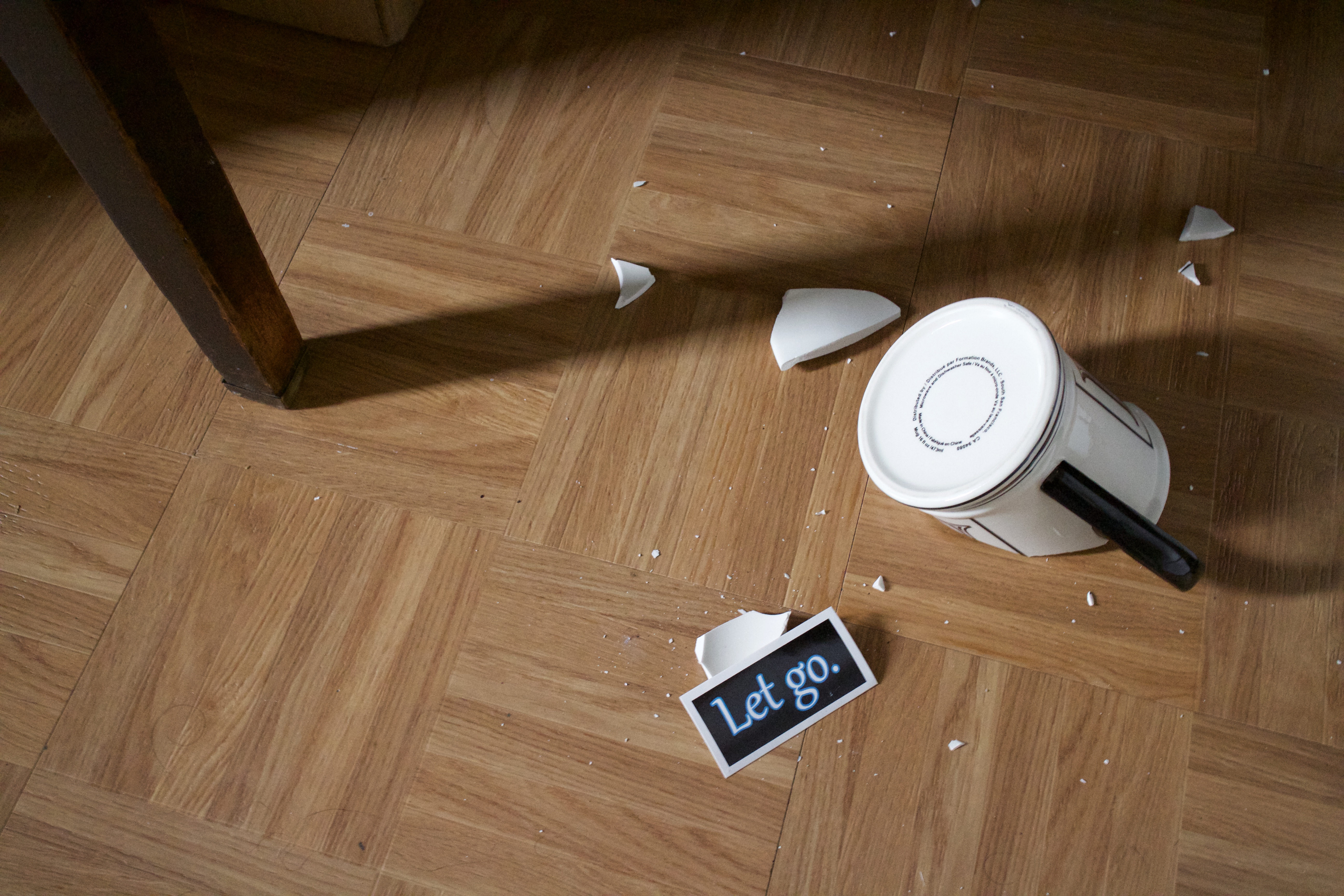
Letting go is a phrase that is often extolled upon us. Most everyone, to some degree, has experienced what this means; most of us by now have let go of something emotionally burdensome from our pasts, even if that thing may not be as highly charged as others.
Yet what is actually happening when we are letting go and how do we actually do it? Anyone who tries to describe how they let go of something will end up unable to describe, in essence, what happened, and that is the way it should be. But we can elaborate a bit more on what is actually transpiring in order to give a better understanding of this everyday imperative, and why it is useful and essential to a healthy wellbeing.
To let go is to gradually put distance between what we are and what we sometimes have. What we are is a life, life itself, and it exists in every moment, perpetually, without worry. What we sometimes have are emotions. Note the use of the word ‘have.’ That is, although we speak in terms of being a specific emotion, i.e. I am angry, I am sad, I am lonely. Such things are in truth not representative of what we are. We hold onto them; they become one’s skin, when they are actually just clothes. What we have also includes experiences, the things that happen to us.
To let go, we sit still and see what is happening to us, in our bodies. We watch the emotions come and go. We observe their fleetingness. Even as they are raging one can view. The more we watch, the closer we look and the closer we look, the more we see. What comes into focus gradually and with patience is that there is some presence inside that is stable while everything else around is moving and in flux. We do not necessarily get caught up in analyzing what this presence is, but we feel it is there.
Crucially, we note the feeling of this presence compared to the highly charged and erratic nature of the emotions we watch. We make a distinction between the two. We may call the former a feeling or an emotion, but we are careful not to muddle the terms since the feeling associated with the former is more of a sensation than an actual emotion. We note the stability of the former, a kind of positive emptiness, compared to the erraticism of the latter.
Here this emptiness, although it may sound of negative connotations is much more full and wholesome than can be deduced. As an example, we can point to a window, as the daoists were fond of doing. The empty space of a window appears to be dependent on some type of frame for its existence; a frame defines an aspect of emptiness, but the emptiness was always there, and is always there. Likewise, in the human person, many things come to frame our presence, but none of them are crucial to that presence being.
Suffering arises because we become attached to the various frames that define how we show up in the world. Emotions happen to us, and we mistake them for life and the sensation of presence. We have experiences that shape us, and we define ourselves accordingly. But then we lose perspective. We come to think that the frames are more representative of who we actually are. We forget that our presence, even when not framed, still is. Letting go means detaching from the frames.
 Existential Conversations